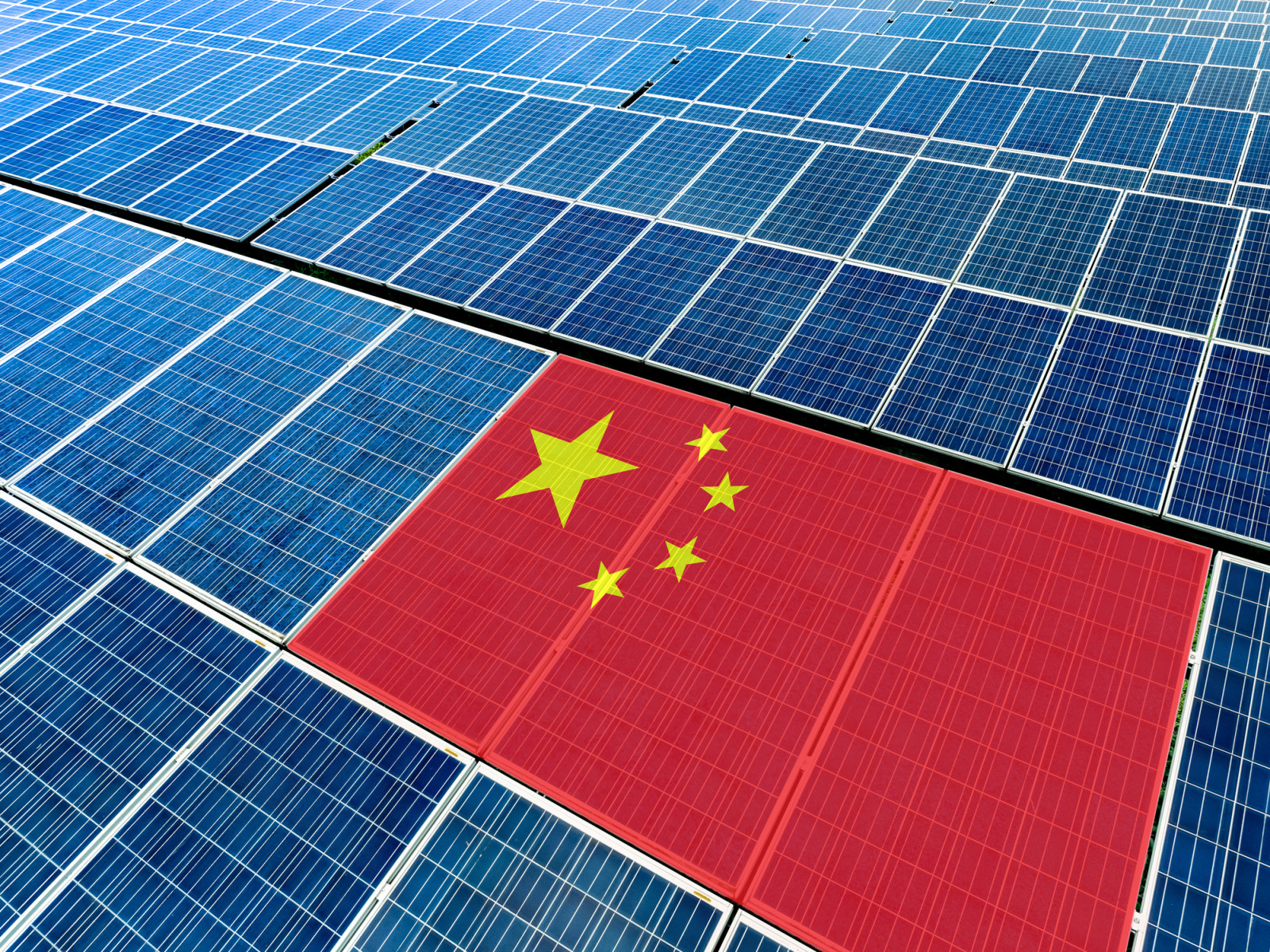
Reluctance to rely on China for green technology could slow climate action
New research suggests that concerns about relying too heavily on Chinese manufacturing are shaping climate policy - and could even delay the adoption of green technologies around the world.
The study by Dr James Jackson from 糖心Vlog官方, working alongside Dr Mathias Larsen from the London School of Economics, examined how China鈥檚 rapid rise as a clean-technology powerhouse has transformed the global energy transition.
While Chinese investment and industrial policy have helped reduce the cost of renewable energy technologies, the research - published in the journal - found that geopolitical tensions are increasingly influencing how governments respond.
For households and businesses, the impact of China鈥檚 manufacturing boom has been clear - solar panels, electric vehicle batteries and other low-carbon technologies are far cheaper than they were a decade ago. According to the researchers, this is partly because China has built enormous production capacity through long-term industrial planning, state investment and support for domestic manufacturers.
Those policies helped create the global supply chains that many countries now rely on to roll out renewable energy systems, making the technologies needed for climate action more accessible worldwide - but the study argues that this success has also created new political tensions.
As Chinese firms dominate key sectors of the clean technology economy, governments elsewhere are increasingly concerned about dependence on overseas supply chains for critical infrastructure. Solar panels on rooftops, batteries in electric cars and components used in renewable energy systems often trace back to factories in China.
According to the researchers, this has changed how climate policy is debated. Instead of focusing only on environmental targets, policymakers are also asking where the industries of the green transition will be located - and which countries will benefit economically.
The result is a push in some countries to build domestic clean technology industries, including batteries and electric vehicles. Governments in Europe and North America are investing heavily in new factories and supply chains to try to compete with China鈥檚 industrial strength.
While these policies aim to boost economic security and protect local jobs, they can also create tensions in climate policy. Producing technologies domestically can be more expensive and slower than importing them from established global suppliers, creating a difficult balancing act.
鈥淭he fastest way to cut emissions may be to deploy the cheapest technologies available, many of which are produced in China - however, political pressure to reduce reliance on foreign manufacturing may encourage governments to prioritise local production, even if this delays deployment鈥� said Dr Jackson. 鈥淎s the world works to replace fossil fuels with renewable energy, the success of climate action may depend not only on technological innovation, but also on how countries manage growing competition over the industries that power the transition.
China鈥檚 dominance in the production of what they call the 鈥榥ew three鈥� technologies is so pronounced that governments may ultimately have to accept that there is no realistic prospect of competing with them at present.
DOI: