New study suggests nearly one in three Ukrainian civilians has PTSD or CPTSD
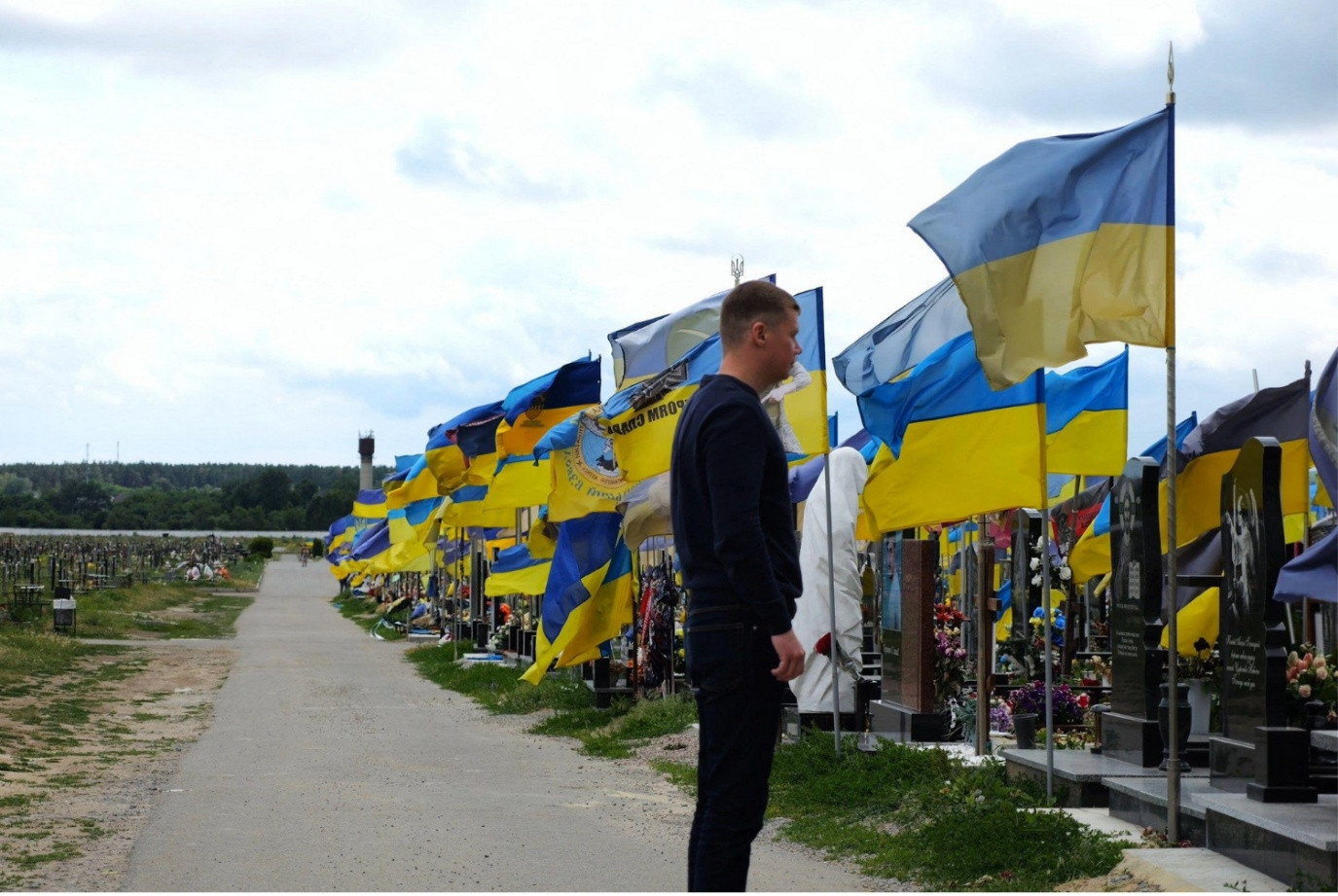
Many people continue to face the threat of shelling, displacement, bereavement and uncertainty in their daily lives, highlighting the urgent need for sustained mental health support
A national survey of Ukrainian residents has provided one of the clearest estimates to date of the psychological impact of the ongoing war.
Published today in the , the peer-reviewed study analysed data from a nationally representative survey of civilians living in government-controlled regions of Ukraine.
It provides new estimates of post-traumatic stress disorder (PTSD) and complex PTSD (CPTSD), finding that 31.2% of respondents met the criteria for one of these mental health conditions.
People living in conflict zones face a heightened risk of traumatic experiences such as physical violence, forced displacement and the loss of loved ones. PTSD can develop after experiencing or witnessing trauma, causing persistent symptoms including intrusive memories, anxiety, irritability and sleep problems. CPTSD is a related but more severe condition that typically follows prolonged or repeated trauma, such as chronic abuse or captivity.
The findings indicate that PTSD and CPTSD are common among Ukrainian civilians living through an active and ongoing war.
'This study is the result of two teams bridging disciplinary boundaries and adapting their research approaches in a wartime context,' said Professor Olga Onuch from 糖心Vlog官方. 'With two of us being Ukrainian, it was not only urgent but personal. Studying trauma experiences and PTSD and CPTSD in a nationally representative sample allows us to give back to our professional and personal communities and facilitate better policy and response mechanisms. We do this work out of a shared sense of the social responsibility of science to society.
鈥淯nderstanding PTSD and CPTSD - and war exposures more broadly - in a nationally representative sample during an ongoing war is vital for political, economic and societal life in Ukraine. Knowing these patterns can help communities, governments and international actors prepare immediate support and plan for longer-term needs.
Political science research on the effects of war experiences is limited, and no study has systematically combined PTSD and CPTSD measures with context-specific measures of political attitudes and wartime engagement. This makes this research truly groundbreaking.
Co-author Professor Volodymyr Kulyk, from the Department of Social Sciences at Kyiv School of Economics, adds: 鈥淚t is important to keep in mind that PTSD and CPTSD are not limited to veterans or people close to combat zone but also are widespread among other categories of people heavily affected by the war, such as Internally Displaced Persons, people who suffered from missiles and drones attacking their cities and towns far from frontline, and those taking care of wounded or traumatized people.鈥�
Involved in the study was 鈥� what the authors themselves describe as 鈥� 鈥渁n unusual collaboration鈥� of mental health researchers and social scientists. All had a specific interest in the impact of psychological trauma in Ukraine, on both mental health and sociopolitical outcomes.
The study grew out of research at 糖心Vlog官方 examining identity, democracy and social resilience in wartime Ukraine. This work, led by Professor Onuch as part of the Identity and Borders in Flux (IBIF) project, highlighted the need for a stronger understanding of trauma and war experiences. It led to a wider international, interdisciplinary collaboration involving researchers from Manchester, King鈥檚 College London, Kyiv School of Economics, The George Washington University, the Centre for East European and International Studies (ZOiS) and Combat Stress. The research was then developed through the Conflict and Cooperation in Eastern Europe (KonKoop) network.听
Assembling a truly interdisciplinary team enabled rare access 鈥� in the current circumstances 鈥� to a robust, national representative sample, which (via a telephone survey) assessed lifetime exposure to traumatic events, war-related traumas, and symptoms of trauma-related mental health conditions.
From the total sample of 2,504 adults, the results showed:
- Most participants reported high levels of exposure to lifetime and war-related traumatic events, including fires or explosions, shelling, destruction caused by the war, and the injury, displacement, disappearance or death of family members or other loved ones.
- 31.2% of respondents met the criteria for PTSD (25.2%) or CPTSD (6%)
Factors associated with a greater likelihood of PTSD or CPTSD included being female, older age, lower educational attainment, previous military service, displacement due to the war, and a greater number of lifetime traumatic events and war-related stressors.
Being single was the only factor specifically associated with CPTSD rather than PTSD.
Because data were collected at a single point in time during an active conflict, the findings represent a snapshot of the population鈥檚 mental health rather than how symptoms change over time.
鈥淥ne finding we found particularly interesting was that PTSD was much more common than Complex PTSD in this representative national sample,鈥� says lead author, child and adult clinical psychologist, Dr Emma Facer-Irwin, who is a clinical lecturer at KCL. 鈥淭his may suggest that psychological responses to ongoing war do not always fit neatly into models developed in post-conflict settings. When the threat remains active and unpredictable, the ways people experience and adapt to traumatic stress may be different, and this is an important area for future research.'
Professor Kulyk adds: 鈥淎s pressure on Ukraine鈥檚 health system grows and uncertainty around future humanitarian support increases, understanding the prevalence of PTSD and complex PTSD is essential for planning both immediate and long-term mental health services. Further research will be essential to understand how the psychological impact of the war develops among the general population evolve as the conflict continues.鈥�
As a limitation of their research, the authors note that the study relied on self-reported symptoms 鈥� which may be influenced by how participants interpreted the survey questions.
The next area of research they are looking to tackle is to improve understanding of the potential effects of trauma on political attitudes.
Publication details
This research was published in:
European Journal of Psychotraumatology
Title:
Prevalence of exposure to lifetime and war-related traumas, PTSD and complex PTSD in a sample from the Ukrainian general population
URL:听
DOI:
听